
Purdue University, a public institution, benefits from significant funding from the State of Indiana. This funding greatly influences the tuition fees for domestic students. With students from all 50 states and around the world, it’s vital to grasp the criteria for in-state tuition eligibility. This knowledge is essential for prospective students.

The difference between in-state and out-of-state tuition can be substantial. It’s critical to understand the criteria that determine eligibility for in-state tuition rates at Purdue. This knowledge can significantly impact a student’s financial planning.
Key Takeaways
- Understanding the difference between in-state and out-of-state tuition is key.
- Purdue University’s funding from the State of Indiana affects tuition fees.
- Eligibility criteria for in-state tuition rates are based on specific requirements.
- Domestic students from Indiana may qualify for lower tuition rates.
- Out-of-state students face higher tuition fees due to lack of state funding eligibility.
Understanding the Financial Impact of In-State Tuition at Purdue
The cost of attending Purdue University varies greatly based on residency status. In-state tuition offers significant financial benefits. Resident students pay less tuition and fees than non-resident or international students. This is because they or their families have paid taxes that contribute to Purdue’s state funding.
Cost Comparison: In-State vs. Out-of-State Tuition
In-state tuition at Purdue is significantly lower than out-of-state tuition. For example, during the 2022-2023 academic year, in-state tuition and fees were about $10,002. Non-residents, on the other hand, paid around $28,794. This highlights the financial advantage of qualifying for in-state tuition.
| Tuition Category | Tuition and Fees |
| In-State Tuition | $10,002 |
| Out-of-State Tuition | $28,794 |
Potential Savings Over a Four-Year Degree
The savings from in-state tuition over a four-year degree are substantial. By attending Purdue as an in-state student, one can save about $74,736 compared to out-of-state tuition rates. This significant saving emphasizes the importance of understanding and qualifying for in-state tuition.
Understanding the financial implications of in-state tuition at Purdue is vital for students and their families. Qualifying for in-state tuition can significantly reduce educational expenses. This makes Purdue a more affordable option for students.
Purdue University In-State Tuition Requirements Overview
To qualify for in-state tuition at Purdue University, students must meet specific residency and enrollment criteria. It’s vital for those looking to lower their tuition costs to grasp these requirements.
Legal Residency vs. Tuition Residency
It’s important to differentiate between legal residency and tuition residency. Legal residency pertains to a person’s permanent home, used for tax and voting. On the other hand, tuition residency is about qualifying for in-state tuition rates at universities. Purdue University demands students prove tuition residency to get in-state tuition.
Basic Eligibility Criteria
To qualify for in-state tuition, students must fulfill certain criteria. These include age requirements and enrollment status considerations.
Age Requirements
Students aged 18 or older who have lived in Indiana for at least 12 months may qualify for in-state tuition. Yet, younger students might qualify if their parents or guardians have Indiana residency.
Enrollment Status Considerations
Purdue University looks at a student’s enrollment status for in-state tuition eligibility. Full-time enrollment is usually required, but part-time students might qualify under specific conditions.
Those who think they qualify as residents must apply for residency reclassification. They’ll need to provide extra documentation to back their claim. Knowing these requirements can streamline the process for in-state tuition eligibility.
Establishing Indiana Residency: Primary Requirements
To enjoy lower tuition rates, students must grasp the key steps for Indiana residency. Achieving residency in Indiana is complex, requiring proof of physical presence, length of stay, and a genuine intent to stay. These elements are essential for qualifying for in-state tuition at Purdue University.
Physical Presence Requirements
Students must spend a considerable amount of time in Indiana. It’s not just about visiting; it’s about making it your permanent residence. Purdue University clarifies, “Residency is not solely determined by the length of stay but by the intent to remain.”
Duration of Residency Needed
The length of time you’ve lived in Indiana matters a lot. Typically, students need to have been in the state for at least 12 months before classes start. This period is critical for in-state tuition eligibility.
Intent to Remain in Indiana
Showing you plan to stay in Indiana is vital. This can be proven by getting an Indiana driver’s license, registering to vote, and filing state income tax returns. These actions demonstrate your commitment to the state.
Demonstrating Permanent Ties
Building lasting connections in Indiana is key. This can be done by getting a job, renting or buying a home, and participating in local activities. Such actions show you’re invested in the community.
Employment Considerations
Having a job in Indiana is a big plus for residency. Whether you’re employed or self-employed, it helps prove your ties to the state.
The quote highlights the essence of residency: “Residency is not just about living in a place, it’s about making it your home.” This emphasizes the need for genuine connections to Indiana.
In conclusion, achieving Indiana residency involves physical presence, duration, and a clear intent to stay. By meeting these criteria, students can qualify for in-state tuition at Purdue University.
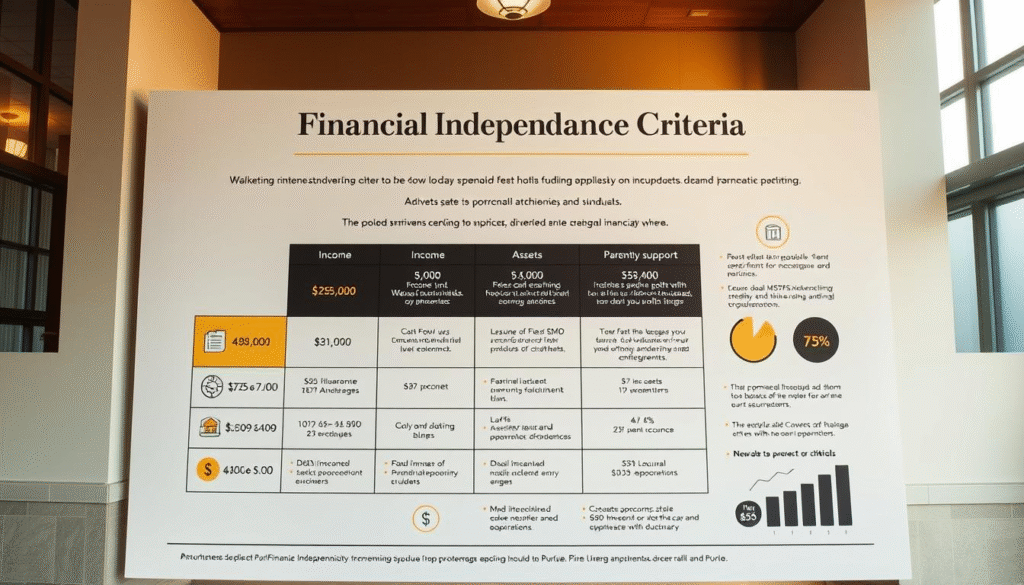
Financial Independence Criteria for Students
For students aiming at Purdue University’s in-state tuition, grasping the financial independence criteria is vital. Students deemed financially independent are self-supporting, not claimed as dependents on another’s taxes.
Self-Supporting Status Requirements
To qualify as financially independent, students must fulfill specific requirements. They must show they are not dependent on parental or guardian support.
Income Thresholds
Meeting Purdue University’s income thresholds is a key factor. Students need to have enough income to support themselves.
Parental Support Limitations
Another important aspect is the parental support limitation. Students claiming financial independence must not receive substantial financial help from their parents or guardians.
| Criteria | Description | Requirement |
| Income Threshold | Minimum income required for self-support | $10,000 per year |
| Parental Support | Limitation on financial assistance from parents | Less than 50% of total support |
Tax Filing Considerations
Tax filing status is a critical factor. Financially independent students must file their taxes independently, not as dependents on another’s return.
“Financial independence is not just about earning a certain amount; it’s about demonstrating self-sufficiency and making informed decisions about your financial situation.”
By understanding and fulfilling these criteria, students can claim financial independence. This could help them qualify for in-state tuition at Purdue University.
Special Circumstances and Exceptions
Purdue University recognizes that some individuals might qualify for in-state tuition under special circumstances. These exceptions cater to unique situations not covered by standard criteria.
Military Personnel and Veterans
Military personnel and veterans could be eligible for in-state tuition rates. Qualified service members and their dependents can gain resident status for tuition and fees. They must provide documentation of their military status to qualify.
Children of Alumni
Children of Purdue University alumni might also receive special consideration. While it doesn’t automatically grant in-state tuition, it’s a factor in eligibility. Documentation of alumni status is necessary.
Reciprocity Agreements with Neighboring States
Purdue University has reciprocity agreements with some neighboring states, impacting tuition rates. Residents of participating states might qualify for in-state tuition at Purdue.
These special circumstances and exceptions show Purdue University’s dedication to making education accessible. Understanding these options helps prospective students navigate the eligibility process more effectively.
Required Documentation for Proving Residency
Securing in-state tuition at Purdue University requires proving residency. This step is essential and demands careful documentation. Students must show their commitment to living in Indiana through various documents.
Essential Documents Checklist
To support their residency claim, students need to gather specific documents:
- Indiana Driver’s License or State ID: A valid Indiana driver’s license or state ID is a primary document for establishing residency.
- Lease Agreements and Property Documents: A lease agreement or property deed in the student’s name demonstrates a commitment to residing in Indiana.
- Utility Bills and Bank Statements: Utility bills, such as electricity or water bills, and bank statements with an Indiana address further support a student’s residency claim.
Indiana Driver’s License or State ID
An Indiana driver’s license or state ID is a critical document for proving residency. It must be valid and not expired.
Lease Agreements and Property Documents
A lease agreement or property documents, such as a deed or mortgage statement, in the student’s name is essential for establishing a physical presence in Indiana.
Utility Bills and Bank Statements
Utility bills and bank statements with an Indiana address help to further establish a student’s residency. These documents should be recent and reflect the student’s name and Indiana address.
Secondary Supporting Evidence
In addition to the essential documents, students may need to provide secondary supporting evidence, such as:
- Employment records or pay stubs
- Voter registration cards
- Vehicle registration
These documents can help to strengthen a student’s residency claim by providing additional evidence of their ties to Indiana.
Notarization Requirements
Some documents may require notarization to be considered valid. Students should check with Purdue University’s residency office to determine which documents need to be notarized.

By gathering and submitting the required documentation, students can ensure a smooth process for establishing their residency status at Purdue University.
Step-by-Step Application Process for In-State Tuition Status
Applying for in-state tuition at Purdue University is a clear-cut process. It demands meticulous attention to detail. Understanding the guidelines and necessary documents is key to a seamless application.
Timeline for Application Submission
Students must apply for in-state tuition well before the semester they aim for. The Residency Reclassification Portal opens in January for the fall semester. It opens in September for the spring semester, closing in October.
Completing the Residency Classification Form
The Residency Classification Form is vital. Students must fill it out accurately, providing all necessary details to support their in-state tuition claim.
Section-by-Section Guidance
When filling out the form, students should:
- Clearly state their current residency status.
- Include all relevant documents to prove their application, such as proof of living in Indiana and intent to stay.
- Double-check their application for any errors before submitting it.
Common Form Errors to Avoid
To prevent delays or denials, students should avoid common mistakes. These include:
- Leaving out or missing information.
- Not providing enough supporting documents.
- Forgetting to sign and date the form.
Submitting Supporting Documentation
Submitting the right documents is essential for a successful application. Students must upload essential documents like proof of Indiana residency through the Residency Reclassification Portal. Clear, legible copies are recommended to avoid delays.
Common Challenges and How to Overcome Them
Many students struggle with Purdue University’s in-state tuition requirements. But, being well-informed can make a big difference. It’s essential to grasp the details of Purdue’s in-state tuition policies to navigate any obstacles.
Addressing Gaps in Residency
Residency gaps pose a significant hurdle for in-state tuition eligibility. Students must provide detailed documentation to bridge these gaps. This can include medical records or proof of temporary work or study abroad.
Handling Denied Applications
When an in-state tuition application is denied, it’s important to understand the reasons. Often, reapplying with more information can result in approval.
Appeal Process Overview
The appeal process is vital for students denied in-state tuition. It involves submitting a formal appeal with supporting documents.
Preparing for the Appeal Hearing
To prepare for the appeal, students should collect all relevant documents. This includes any new evidence that supports their in-state tuition claim.
Additional Documentation Needs
Additional documents might include employer affidavits, voter registration proof, or other evidence showing a commitment to Indiana residency.
| Challenge | Solution |
| Gaps in Residency | Provide thorough documentation explaining the gap |
| Denied Applications | Reapply with additional documentation |
| Appeal Process | Submit a formal appeal with supporting documentation |
Purdue University’s Residency Office emphasizes, “The key to a successful appeal is providing detailed and persuasive evidence that supports the student’s in-state tuition claim.”

Maintaining In-State Tuition Status
Qualifying for in-state tuition at Purdue University is just the beginning. It’s essential to understand the ongoing requirements to keep this status. Staying compliant with these requirements is key to avoiding any changes in your tuition status.
Ongoing Requirements
To keep in-state tuition, students must continue to meet the eligibility criteria from their initial application. This includes maintaining a physical presence in Indiana and showing intent to remain a resident. Purdue University regularly checks student residency status. It’s vital to stay updated on these ongoing requirements.
Reporting Changes in Circumstances
Any changes in a student’s life can affect their in-state tuition status. It’s critical to inform Purdue’s Residency Office about these changes. You should report:
- Changes in address or physical presence
- Employment status changes
- Marital status changes
Academic Breaks and Summer Periods
Students need to know that academic breaks or summer sessions can impact their residency status. Continuing to meet the physical presence requirement during these times is essential. Students on breaks should ensure they are considered Indiana residents.
Employment Changes
Employment status changes, like becoming employed or unemployed, can affect your residency. Reporting any employment changes to the Residency Office is vital to maintain in-state tuition status.
Expert Tips for Successful In-State Tuition Qualification
Prospective students aiming for Purdue’s in-state tuition must plan carefully. It’s vital to grasp Purdue University’s residency rules for a smooth application process.
Planning Ahead: Timeline for Prospective Students
Planning is key. Students should know the timeline for residency and in-state tuition applications. Starting early helps avoid delays and ensures a smooth process.
- Begin gathering required documents at least 6 months prior to the start of the semester.
- Submit the residency classification form and supporting documents well in advance of the deadline.
- Follow up with Purdue’s Residency Office to ensure all documents have been received and processed.
Common Mistakes to Avoid
Avoiding common pitfalls is essential for a successful application. Some mistakes include:
- Not providing enough documentation to support residency claims.
- Missing deadlines for application submission.
- Failing to show clear intent to remain in Indiana.
Consulting with Purdue’s Residency Office
Seeking advice from Purdue’s Residency Office is beneficial. They offer insights on the application process and specific requirements. They can also help with unique situations.
By planning ahead, avoiding common errors, and getting expert advice, students can greatly improve their chances of in-state tuition at Purdue University.
Conclusion
Grasping Purdue’s in-state tuition rules is key for students aiming to cut down on costs. To qualify, students must meet certain criteria. This includes proving they are legal residents of Indiana and financially independent.
Key considerations include physical presence, how long they’ve lived in Indiana, and their intent to stay. Students must also go through the application process. This involves submitting necessary documents and following specific deadlines.
By understanding these requirements, students can lower their tuition fees. This makes Purdue University a more budget-friendly choice. It’s vital for students to plan ahead, avoid common pitfalls, and seek help from Purdue’s Residency Office if needed.
In conclusion, knowing and fulfilling Purdue’s in-state tuition rules can save a lot over four years. It’s a smart move for students to fully understand these guidelines.
Sources
For more information on Purdue University’s in-state tuition requirements, you can refer to the following reliable sources:
- Purdue University Official Website
- Purdue University Residency Information
- Purdue University Admissions: Residency
These sources offer detailed insights into eligibility criteria, the application process, and necessary documentation. They are essential for understanding Purdue University’s in-state tuition requirements.
FAQ
What are the primary requirements for establishing Indiana residency for in-state tuition at Purdue University?
To qualify for in-state tuition at Purdue, students must show they live in Indiana. This means proving they have a permanent home in the state, have been there for a while, and plan to stay. Evidence includes things like a job, tax filings, and other signs of being a resident.
How does financial independence affect in-state tuition eligibility at Purdue University?
Being financially independent is key to getting in-state tuition at Purdue. Students need to show they support themselves, meet certain income levels, and file taxes on their own. This proves they don’t rely on others financially.
Are there special circumstances or exceptions that can affect in-state tuition eligibility at Purdue University?
Yes, there are special cases that can change if you qualify for in-state tuition at Purdue. These include being in the military, being a veteran, having a parent who graduated from Purdue, or living in a state with a tuition agreement with Indiana. Each case has its own rules, so it’s important to check them out.
What documentation is required to prove residency for in-state tuition at Purdue University?
To prove you live in Indiana, you’ll need to gather certain documents. This includes a driver’s license, voter registration, and tax returns. You might also need to show things like utility bills and lease agreements to back up your claim.
How do I apply for in-state tuition status at Purdue University, and what is the timeline for submission?
To get in-state tuition at Purdue, you need to fill out a residency form and send in your documents. When to apply depends on your situation, but it’s best to do it early. This way, you can avoid any delays in getting your tuition status sorted out.
What are the ongoing requirements for maintaining in-state tuition status at Purdue University?
To keep your in-state tuition at Purdue, you must keep meeting the requirements. This means staying in Indiana and showing you intend to stay. You also need to tell Purdue about any changes in your situation that might affect your residency status.
Can I appeal a denied application for in-state tuition status at Purdue University?
Yes, if your application for in-state tuition is turned down, you can appeal. You’ll need to provide more information or documents that support your claim of living in Indiana. Purdue will review your application and evidence again to see if you qualify.
How can I ensure a successful in-state tuition qualification process at Purdue University?
To make sure you qualify for in-state tuition at Purdue, plan carefully and avoid mistakes. It helps to talk to Purdue’s Residency Office and understand what you need to do. Knowing the rules and what documents you need is key to a successful application.
What are the benefits of in-state tuition at Purdue University, and how can it impact my overall educational expenses?
Getting in-state tuition at Purdue can save you a lot of money compared to out-of-state rates. It makes your education more affordable. By qualifying for in-state tuition, you can cut down on your total education costs.