
In the United States, businesses spend over $100 billion annually on Google advertising. This makes it a significant investment for many companies.
With the rise of digital marketing, understanding Google ad cost and Google advertising pricing is key. It’s essential for businesses to maximize their return on investment (ROI).
The cost of Google advertising varies widely. This depends on several factors, including the industry, target audience, and ad placement.
Key Takeaways
- Google advertising is a significant investment for businesses in the United States.
- The cost of Google advertising varies depending on several factors.
- Understanding Google ad cost is critical for maximizing ROI.
- Google advertising pricing can be influenced by industry and target audience.
- Businesses need to be aware of the factors that affect Google ad cost.
Understanding Google Ads Pricing Basics
To navigate the world of Google Ads, one must first grasp the fundamentals of its pricing model. Google Ads operates on a complex system that requires advertisers to understand its various components to maximize their return on investment (ROI).
The Pay-Per-Click (PPC) Model Explained
The PPC model is a cornerstone of Google Ads pricing. Advertisers pay each time a user clicks on their ad, making it a performance-based advertising model. This approach allows businesses to manage their budgets effectively and measure the success of their campaigns.
How Google Charges Advertisers
Google charges advertisers based on the cost-per-click (CPC), which is determined by factors such as keyword competition and ad quality. A well-optimized ad campaign can significantly reduce CPC, leading to better ROI.
Impression vs. Click-Based Billing
Google Ads offers both impression-based and click-based billing. Impression-based billing charges advertisers for every 1,000 times their ad is displayed, while click-based billing charges only when a user clicks on the ad. Understanding the difference between these billing methods is critical for selecting the right advertising strategy.
Different Google Advertising Platforms and Their Cost Structures
Google offers various advertising platforms, including Search Ads, Display Network, and YouTube Ads, each with its own cost structure. The table below summarizes the key differences:
| Platform | Cost Structure | Typical Use Case |
|---|---|---|
| Search Ads | CPC-based | Targeting users searching for specific keywords |
| Display Network | CPM or CPC | Reaching a wider audience across various websites |
| YouTube Ads | CPM or CPC | Targeting users on YouTube based on demographics and interests |
Average Google Advertising Costs in 2023
The cost of Google ads in 2023 varies widely across industries. It’s vital to grasp the factors affecting these costs. Businesses must understand the typical cost-per-click (CPC) in various sectors to manage their budgets effectively.
Typical Cost-Per-Click (CPC) Across Industries
The CPC for Google Ads varies significantly by industry. Competition, keyword demand, and advertiser strategies are key factors in determining CPC.
B2B vs. B2C CPC Comparisons
B2B CPC is generally higher than B2C due to the higher value of B2B transactions. For example, finance and insurance often face intense competition, leading to higher CPCs.
Seasonal Cost Fluctuations
Google Ads costs can change with the seasons. Certain industries see higher CPCs during peak times. Retail businesses, for instance, may face increased CPCs during holidays.
Monthly and Annual Budget Expectations
It’s essential for businesses to understand their monthly and annual budget expectations. This helps in planning Google Ads spend effectively.
Small Business Budget Benchmarks
Small businesses usually start with budgets ranging from $500 to $2,000 monthly. This allows them to test various ad strategies and optimize their campaigns.
Enterprise-Level Investment Ranges
Enterprises, in contrast, may invest significantly more, sometimes tens of thousands of dollars monthly. This is to maintain a competitive edge and achieve broader marketing goals.
| Industry | Average CPC | Monthly Budget Range |
|---|---|---|
| Finance | $5-$15 | $1,000-$10,000 |
| Retail | $1-$5 | $500-$5,000 |
| Technology | $3-$10 | $2,000-$20,000 |
How Much Does It Cost for Google Advertising Based on Industry
Industry significantly influences Google ad costs, with some sectors facing higher expenses than others. This disparity stems from competition levels, consumer behavior, and conversion value differences across industries.
High-Competition Industries and Their Cost Premiums
Highly competitive sectors, like legal and financial services, see elevated Google ad costs. This is due to intense bidding on the same keywords, increasing the cost-per-click (CPC).
Legal and Financial Services
Legal and financial services are among the most competitive for Google ads, with CPCs often exceeding $50. Keywords like “personal injury lawyer” or “credit card processing services” can have CPCs in the hundreds. This is due to high demand and competition.
Insurance and Healthcare
Insurance and healthcare industries also face high CPCs, mainly for keywords related to specific treatments or insurance quotes. Effective keyword targeting and ad copy are essential in these sectors to manage costs and boost ROI.
Moderate-Cost Industry Benchmarks
Moderate-cost industries, such as retail and e-commerce, typically see CPCs between $0.50 and $5. These sectors benefit from targeted advertising and optimized product listings to improve Google ad performance.
Lower-Cost Advertising Niches
Niches with lower competition, such as certain hobby-related or local service industries, can enjoy lower CPCs, sometimes below $0.20.
“The key to successful Google advertising lies in understanding your industry’s dynamics and leveraging the right strategies.”
By focusing on long-tail keywords and niche topics, businesses in these industries can achieve cost-effective advertising.
Breaking Down Google Search Ads Costs
For businesses aiming to optimize their online ad spend, grasping the details of Google Search Ads costs is essential. These ads follow a pay-per-click (PPC) model. This means advertisers only pay when a user clicks on their ad.
Keyword Bid Strategies and Their Cost Implications
Keyword bid strategies play a significant role in determining Google Search Ads costs. Advertisers compete on keywords related to their offerings. The cost per click (CPC) is influenced by the bid amount, ad quality, and the competitive landscape.
Long-Tail vs. Short-Tail Keyword Pricing
Long-tail keywords, being more specific, often have lower competition and CPCs. For example, “women’s running shoes” might have a lower CPC than the more generic term “shoes.”
Commercial Intent Keywords and Their Premium
Keywords with high commercial intent, like “buy [product name],” command a premium. This is due to their high conversion rates. Advertisers are willing to pay more for these keywords, as they are more likely to lead to sales.
Ad Position and Its Relationship to Cost
Ad position on Google Search results pages is a key factor in cost. Generally, ads in higher positions have higher CPCs. This is because they are more visible and likely to be clicked.
| Ad Position | Average CPC |
|---|---|
| Top | $2.50 |
| Middle | $1.50 |
| Bottom | $0.80 |
The table illustrates how average CPC changes with ad position. Advertisers must carefully manage their bid strategies to achieve the desired ad position while controlling costs.
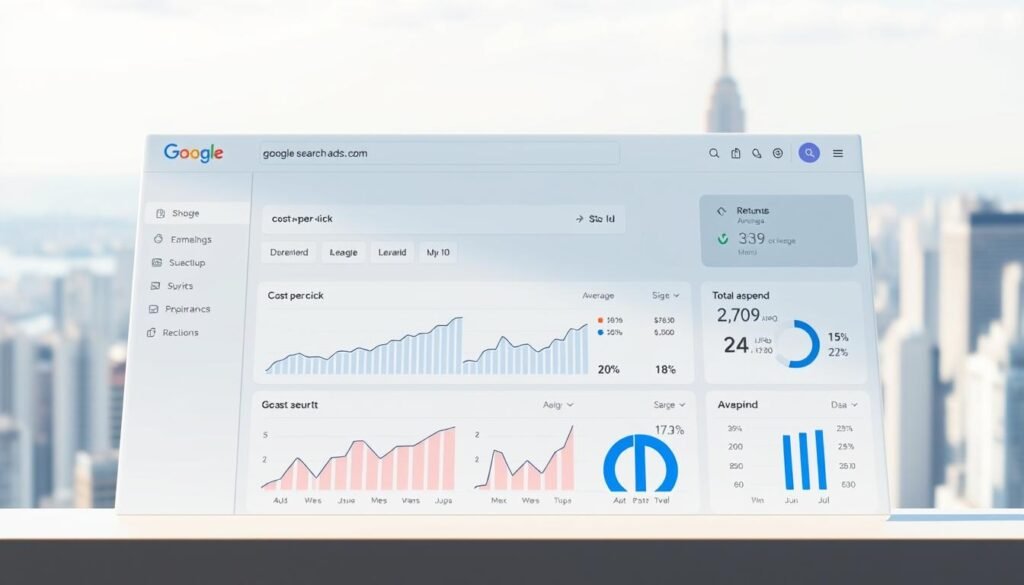
Google Display Network Advertising Costs
Google Display Network advertising costs vary based on several factors. These include pricing models and targeting options. It’s essential for advertisers to grasp these costs to maximize their return on investment (ROI).
CPM vs. CPC Pricing Models
The Google Display Network offers two main pricing models: Cost Per Mille (CPM) and Cost Per Click (CPC). CPM is best for brand awareness, charging for every 1,000 impressions. On the other hand, CPC is better for traffic-driven campaigns, charging only when clicked.
Targeting Options and Their Price Points
Targeting options significantly influence Google Display Network advertising costs. Advertisers can target users by demographics, interests, and behaviors, among others.
Demographic Targeting Costs
Demographic targeting allows for reaching specific age groups, genders, and income levels. The cost varies, with more competitive demographics demanding higher prices.
Remarketing Campaign Pricing
Remarketing campaigns target users who’ve interacted with an advertiser’s site or app before. They can be cost-effective, as targeting users with prior interest often yields a higher ROI.
Understanding the Google Display Network’s pricing models and targeting options helps advertisers manage costs effectively. This knowledge is key to achieving campaign goals.
YouTube Advertising Cost Structure
For marketers aiming to maximize their video ad campaigns, grasping the cost structure of YouTube advertising is critical. YouTube presents a variety of ad formats, each with its own pricing model. This allows advertisers to select the most suitable option for their campaigns.
Video Ad Formats and Their Pricing
YouTube offers several video ad formats, including TrueView In-Stream Ads, Discovery Ads, and Bumper Ads. Each format has its own pricing mechanism, catering to different campaign needs.
TrueView In-Stream Ads
TrueView In-Stream Ads are skippable ads that can appear before, during, or after a video. Advertisers only incur costs if a viewer watches for at least 30 seconds or clicks on the ad.
Discovery and Bumper Ads
Discovery Ads show up in YouTube search results and video recommendations, with costs tied to clicks. Bumper Ads, being short and non-skippable, play before a video and are charged on a CPM basis.
Viewer Engagement Metrics and Cost Considerations
Viewer engagement is a key factor in the cost of YouTube advertising. Metrics like watch time, click-through rate, and drop-off points are vital for optimizing campaigns to enhance ROI.
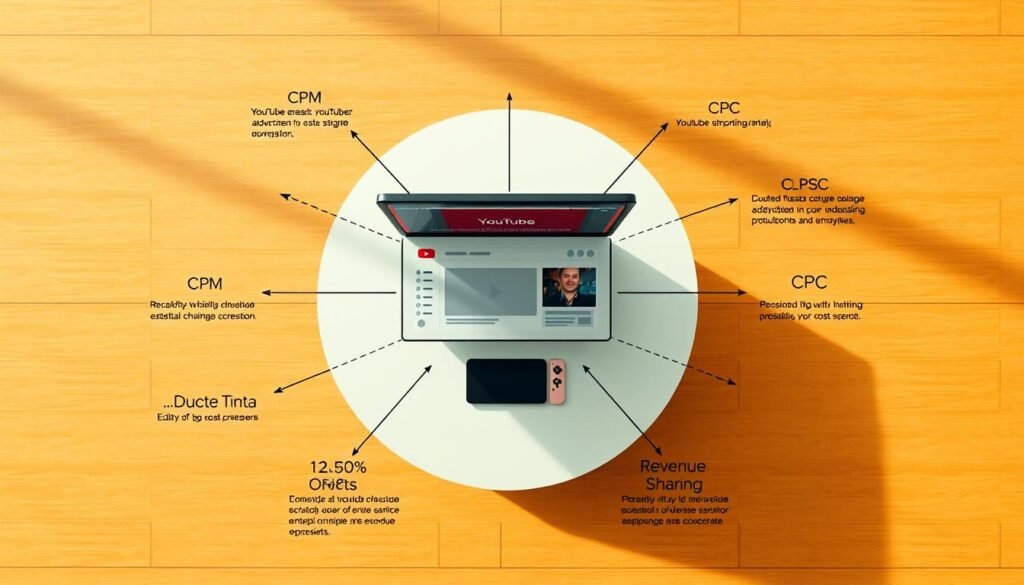
| Ad Format | Pricing Model | Cost Considerations |
|---|---|---|
| TrueView In-Stream Ads | CPV (Cost Per View) | Pay only if watched for 30 seconds or clicked |
| Discovery Ads | CPC (Cost Per Click) | Pay per click on the ad |
| Bumper Ads | CPM (Cost Per Mille) | Pay per 1,000 impressions |
Google Shopping Ads: Pricing and ROI
For businesses selling products online, understanding Google Shopping Ads pricing is key to maximizing ROI. Google Shopping Ads enable retailers to showcase their products in Google’s search results. This makes it a powerful tool for boosting sales.
Product Listing Ad Costs
The cost of Product Listing Ads on Google Shopping varies. It depends on the industry’s competitiveness, the product’s price, and the advertiser’s bid. Cost-per-click (CPC) is a critical metric, as it directly influences the campaign’s cost.
Optimizing Shopping Campaigns for Better Cost Efficiency
To enhance cost efficiency in Google Shopping campaigns, focus on two key areas. These are product feed optimization and competitive pricing strategies.
Product Feed Optimization Techniques
Optimizing product feeds means ensuring data is accurate and up-to-date. It also means structuring it in a way Google Shopping can understand. This includes using high-quality product images, detailed descriptions, and correct categorization.
Competitive Pricing Strategies
Employing competitive pricing strategies is vital. It ensures your products are priced competitively in Google Shopping. This involves monitoring competitor prices and adjusting bids to stay competitive.
By concentrating on these strategies, businesses can boost their ROI on Google Shopping Ads. This makes their advertising spend more effective.
Setting Up Your First Google Ad Budget
Creating a solid Google Ad budget is key to a successful ad campaign. When starting your first Google Ad campaign, setting the right budget is vital. It directly affects your advertising goals.
Determining a Starter Budget Based on Goals
Your Google Ad budget must match your campaign’s objectives. Whether you aim for brand awareness or conversions, your budget’s impact on performance is significant.
Awareness vs. Conversion Campaign Budgets
Awareness campaigns need a larger budget for wider reach and visibility. Conversion campaigns, focusing on specific actions, require a more targeted budget.
Testing Budget Allocation
Testing different budget allocations is critical. Begin with a conservative budget and adjust as needed based on performance data.
Daily vs. Lifetime Budget Considerations
Google Ads lets you choose between daily and lifetime budgets. A daily budget is your average daily spend. A lifetime budget is your total campaign spend.
| Budget Type | Description | Best For |
|---|---|---|
| Daily Budget | Average daily spend | Ongoing campaigns |
| Lifetime Budget | Total campaign spend | Time-sensitive promotions |

Understanding your campaign goals and selecting the right budget type is essential. It optimizes your Google Ad campaign for better performance and ROI.
Advanced Bidding Strategies to Control Google Ad Costs
Advertisers can significantly reduce their Google Ad spend by leveraging advanced bidding strategies. Effective bid management is key to maximizing ROI while minimizing costs. Google Ads offers various bidding strategies to help advertisers achieve their campaign goals.
Manual vs. Automated Bidding
Manual bidding gives advertisers control over their bids, allowing for precise adjustments based on campaign performance. It requires constant monitoring and can be time-consuming. Automated bidding, on the other hand, uses machine learning algorithms to optimize bids in real-time, based on the advertiser’s specified goals, such as target CPA or ROAS.
Automated bidding strategies can simplify the bidding process and potentially improve campaign performance. Advertisers can choose from various automated bidding strategies, including:
- Target CPA (Cost Per Acquisition)
- Target ROAS (Return on Ad Spend)
- Maximize Conversions
- Maximize Clicks
Target CPA and ROAS Strategies
Target CPA and ROAS are advanced bidding strategies that allow advertisers to optimize their bids for specific conversion goals. Target CPA focuses on achieving a specific cost per acquisition, while Target ROAS aims to achieve a specific return on ad spend.
For instance, if an advertiser sets a target CPA of $10, Google Ads will aim to get conversions at or below that cost. Setting a target ROAS of 300% means the advertiser wants to generate $3 in revenue for every dollar spent on ads.
Bid Adjustments for Different Devices and Times
Bid adjustments enable advertisers to fine-tune their bids based on device, location, time of day, and other factors. This can help optimize ad spend and improve campaign performance.
Mobile vs. Desktop Bid Strategies
Advertisers can adjust their bids based on whether users are accessing their ads on mobile devices or desktops. For example, if mobile users are more likely to convert, an advertiser might increase their bids for mobile devices.
Day-Parting for Cost Efficiency
Day-parting involves adjusting bids based on the time of day or day of the week. Advertisers can increase bids during peak conversion hours and decrease them during less effective times, optimizing their ad spend.
| Bidding Strategy | Description | Benefits |
|---|---|---|
| Manual Bidding | Advertisers set their own bids | Control over bids, precise adjustments |
| Automated Bidding | Google Ads optimizes bids based on goals | Simplified bidding, improved performance |
| Target CPA | Optimizes for specific cost per acquisition | Cost-effective conversions |
| Target ROAS | Optimizes for specific return on ad spend | Maximized revenue |
By employing these advanced bidding strategies, advertisers can better control their Google Ad costs and improve their campaign’s overall performance. Whether through manual or automated bidding, or by leveraging bid adjustments, advertisers have multiple tools at their disposal to optimize their Google Ads campaigns.
Measuring ROI and Cost-Effectiveness of Google Ads
Evaluating the cost-effectiveness of Google Ads is vital for advertisers to maximize their ad spend. They must focus on key performance indicators that directly impact their return on investment (ROI).
Key Performance Indicators to Track
To gauge the success of Google Ads campaigns, advertisers should monitor specific metrics. These metrics offer insights into ad performance.
Conversion Rate and Cost Per Conversion
The conversion rate shows the percentage of users who complete a desired action after clicking on an ad. Cost per conversion calculates the average spend needed for a conversion. These metrics help advertisers gauge the effectiveness of their ad campaigns.
Customer Lifetime Value Considerations
Understanding the customer lifetime value (CLV) is key for assessing Google Ads’ long-term ROI. CLV represents the total value a customer brings to a business over their lifetime. By comparing CLV to the cost per conversion, advertisers can assess the profitability of their ad campaigns.
Using Google Analytics to Evaluate Ad Spend
Google Analytics is a powerful tool for evaluating Google Ads effectiveness. By integrating Google Analytics with Google Ads, advertisers can gain a deeper understanding of their ad performance. This allows for data-driven decisions.
| Metric | Description | Importance |
|---|---|---|
| Conversion Rate | Percentage of users who complete a desired action | High |
| Cost Per Conversion | Average spend per conversion | High |
| Customer Lifetime Value | Total value a customer brings over their lifetime | High |
Common Mistakes That Increase Google Advertising Expenses
To manage Google advertising costs effectively, it’s vital to recognize and sidestep common pitfalls. A strategic approach is necessary to prevent unnecessary expenses. This ensures your Google Ads budget goes further.
Broad Match Keywords Without Proper Management
Using broad match keywords without careful management can lead to unwanted clicks and higher costs. It’s critical to grasp how different keyword match types impact your ad’s visibility and expense.
Keyword Match Type Strategy
A well-thought-out keyword match type strategy is essential. Combining broad match, phrase match, and exact match keywords helps target the right audience while keeping costs in check.
Search Term Report Analysis
Regularly reviewing your search term report is key. It helps spot irrelevant searches that trigger your ads. This insight allows you to add negative keywords and refine your targeting.
Neglecting Negative Keywords and Audience Exclusions
Ignoring negative keywords and audience exclusions can lead to wasted spend on irrelevant traffic. By excluding unwanted audiences and search terms, you can cut down on unnecessary expenses.
- Identify and add negative keywords regularly.
- Use audience exclusions to target relevant users.
- Monitor and adjust your exclusions based on performance data.
By steering clear of these common errors, advertisers can better manage their Google advertising expenses. This leads to a more effective return on investment.
Conclusion: Maximizing Value from Your Google Ads Investment
Understanding the complexities of Google advertising pricing is key to boosting your ROI in the Google Ads world. To maximize your Google Ad budget, it’s vital to know what affects costs and how to tweak them for better results.
This article has delved into the various factors that shape Google Ads costs. From the Pay-Per-Click model’s basics to advanced bidding tactics, grasping these can guide your spending decisions. This knowledge enhances your campaign’s performance.

To boost your ROI, concentrate on refining your keyword strategies, ad placement, and targeting. Keeping a close eye on your campaign’s performance and making adjustments as necessary is critical. This approach ensures a more effective Google Ads investment.
By implementing the strategies and insights shared, you can elevate your Google Ads campaigns. This ensures your advertising budget is utilized efficiently for your business’s growth.
Sources
For more information on Google advertising costs, refer to the following resources:
- Google Ads Official Website
- Google Ads Help Center
- WordStream: How Much Does Google Ads Cost?
Understanding the cost of Google advertising is essential for businesses aiming to maximize their ROI. For the latest data on Google advertising costs and strategies, visit the above resources. They provide insights into the best practices for your Google Ads campaigns. This includes understanding how much it costs for Google advertising.
FAQ
How much does Google advertising typically cost?
Google advertising costs vary widely. They depend on industry, target audience, and ad format. On average, businesses pay between
FAQ
How much does Google advertising typically cost?
Google advertising costs vary widely. They depend on industry, target audience, and ad format. On average, businesses pay between $1 and $2 per click. But, costs can skyrocket in competitive industries.
What is the average cost-per-click (CPC) for Google Ads?
The average CPC for Google Ads varies by industry. It ranges from $0.50 to $5 or more per click. Legal services, for example, can see CPCs as high as $50 or more.
How do I determine my Google Ads budget?
To determine your Google Ads budget, consider your business goals and target audience. Also, look at industry benchmarks. Start with a small budget and adjust as needed based on ad performance.
What is the difference between CPC and CPM pricing models?
CPC charges advertisers per ad click, while CPM charges per 1,000 ad impressions. CPC is often used for search ads. CPM is used for display ads.
How can I reduce my Google Ads costs?
To reduce Google Ads costs, optimize your ad targeting and use relevant keywords. Improve ad quality too. Regularly reviewing and adjusting your ad campaigns can also help minimize waste and lower costs.
What is the cost of Google Search Ads?
The cost of Google Search Ads varies based on keyword competition and ad position. Advertisers can expect to pay between $0.50 and $5 or more per click. This depends on their industry and targeting.
How much does YouTube advertising cost?
YouTube advertising costs vary based on ad format, targeting, and audience engagement. Advertisers can expect to pay between $0.10 and $0.30 per view. Some formats cost more.
What are the costs associated with Google Shopping Ads?
Google Shopping Ads costs vary based on product pricing, competition, and ad visibility. Advertisers pay per click. Costs range from $0.50 to $5 or more per click, depending on the product and industry.
How do I measure the ROI of my Google Ads campaigns?
To measure the ROI of your Google Ads campaigns, track key performance indicators. These include conversion rate, cost per conversion, and customer lifetime value. Use Google Analytics to evaluate ad spend and optimize campaigns for better ROI.
and per click. But, costs can skyrocket in competitive industries.
What is the average cost-per-click (CPC) for Google Ads?
The average CPC for Google Ads varies by industry. It ranges from
FAQ
How much does Google advertising typically cost?
Google advertising costs vary widely. They depend on industry, target audience, and ad format. On average, businesses pay between $1 and $2 per click. But, costs can skyrocket in competitive industries.
What is the average cost-per-click (CPC) for Google Ads?
The average CPC for Google Ads varies by industry. It ranges from $0.50 to $5 or more per click. Legal services, for example, can see CPCs as high as $50 or more.
How do I determine my Google Ads budget?
To determine your Google Ads budget, consider your business goals and target audience. Also, look at industry benchmarks. Start with a small budget and adjust as needed based on ad performance.
What is the difference between CPC and CPM pricing models?
CPC charges advertisers per ad click, while CPM charges per 1,000 ad impressions. CPC is often used for search ads. CPM is used for display ads.
How can I reduce my Google Ads costs?
To reduce Google Ads costs, optimize your ad targeting and use relevant keywords. Improve ad quality too. Regularly reviewing and adjusting your ad campaigns can also help minimize waste and lower costs.
What is the cost of Google Search Ads?
The cost of Google Search Ads varies based on keyword competition and ad position. Advertisers can expect to pay between $0.50 and $5 or more per click. This depends on their industry and targeting.
How much does YouTube advertising cost?
YouTube advertising costs vary based on ad format, targeting, and audience engagement. Advertisers can expect to pay between $0.10 and $0.30 per view. Some formats cost more.
What are the costs associated with Google Shopping Ads?
Google Shopping Ads costs vary based on product pricing, competition, and ad visibility. Advertisers pay per click. Costs range from $0.50 to $5 or more per click, depending on the product and industry.
How do I measure the ROI of my Google Ads campaigns?
To measure the ROI of your Google Ads campaigns, track key performance indicators. These include conversion rate, cost per conversion, and customer lifetime value. Use Google Analytics to evaluate ad spend and optimize campaigns for better ROI.
.50 to or more per click. Legal services, for example, can see CPCs as high as or more.
How do I determine my Google Ads budget?
To determine your Google Ads budget, consider your business goals and target audience. Also, look at industry benchmarks. Start with a small budget and adjust as needed based on ad performance.
What is the difference between CPC and CPM pricing models?
CPC charges advertisers per ad click, while CPM charges per 1,000 ad impressions. CPC is often used for search ads. CPM is used for display ads.
How can I reduce my Google Ads costs?
To reduce Google Ads costs, optimize your ad targeting and use relevant keywords. Improve ad quality too. Regularly reviewing and adjusting your ad campaigns can also help minimize waste and lower costs.
What is the cost of Google Search Ads?
The cost of Google Search Ads varies based on keyword competition and ad position. Advertisers can expect to pay between
FAQ
How much does Google advertising typically cost?
Google advertising costs vary widely. They depend on industry, target audience, and ad format. On average, businesses pay between $1 and $2 per click. But, costs can skyrocket in competitive industries.
What is the average cost-per-click (CPC) for Google Ads?
The average CPC for Google Ads varies by industry. It ranges from $0.50 to $5 or more per click. Legal services, for example, can see CPCs as high as $50 or more.
How do I determine my Google Ads budget?
To determine your Google Ads budget, consider your business goals and target audience. Also, look at industry benchmarks. Start with a small budget and adjust as needed based on ad performance.
What is the difference between CPC and CPM pricing models?
CPC charges advertisers per ad click, while CPM charges per 1,000 ad impressions. CPC is often used for search ads. CPM is used for display ads.
How can I reduce my Google Ads costs?
To reduce Google Ads costs, optimize your ad targeting and use relevant keywords. Improve ad quality too. Regularly reviewing and adjusting your ad campaigns can also help minimize waste and lower costs.
What is the cost of Google Search Ads?
The cost of Google Search Ads varies based on keyword competition and ad position. Advertisers can expect to pay between $0.50 and $5 or more per click. This depends on their industry and targeting.
How much does YouTube advertising cost?
YouTube advertising costs vary based on ad format, targeting, and audience engagement. Advertisers can expect to pay between $0.10 and $0.30 per view. Some formats cost more.
What are the costs associated with Google Shopping Ads?
Google Shopping Ads costs vary based on product pricing, competition, and ad visibility. Advertisers pay per click. Costs range from $0.50 to $5 or more per click, depending on the product and industry.
How do I measure the ROI of my Google Ads campaigns?
To measure the ROI of your Google Ads campaigns, track key performance indicators. These include conversion rate, cost per conversion, and customer lifetime value. Use Google Analytics to evaluate ad spend and optimize campaigns for better ROI.
.50 and or more per click. This depends on their industry and targeting.
How much does YouTube advertising cost?
YouTube advertising costs vary based on ad format, targeting, and audience engagement. Advertisers can expect to pay between
FAQ
How much does Google advertising typically cost?
Google advertising costs vary widely. They depend on industry, target audience, and ad format. On average, businesses pay between $1 and $2 per click. But, costs can skyrocket in competitive industries.
What is the average cost-per-click (CPC) for Google Ads?
The average CPC for Google Ads varies by industry. It ranges from $0.50 to $5 or more per click. Legal services, for example, can see CPCs as high as $50 or more.
How do I determine my Google Ads budget?
To determine your Google Ads budget, consider your business goals and target audience. Also, look at industry benchmarks. Start with a small budget and adjust as needed based on ad performance.
What is the difference between CPC and CPM pricing models?
CPC charges advertisers per ad click, while CPM charges per 1,000 ad impressions. CPC is often used for search ads. CPM is used for display ads.
How can I reduce my Google Ads costs?
To reduce Google Ads costs, optimize your ad targeting and use relevant keywords. Improve ad quality too. Regularly reviewing and adjusting your ad campaigns can also help minimize waste and lower costs.
What is the cost of Google Search Ads?
The cost of Google Search Ads varies based on keyword competition and ad position. Advertisers can expect to pay between $0.50 and $5 or more per click. This depends on their industry and targeting.
How much does YouTube advertising cost?
YouTube advertising costs vary based on ad format, targeting, and audience engagement. Advertisers can expect to pay between $0.10 and $0.30 per view. Some formats cost more.
What are the costs associated with Google Shopping Ads?
Google Shopping Ads costs vary based on product pricing, competition, and ad visibility. Advertisers pay per click. Costs range from $0.50 to $5 or more per click, depending on the product and industry.
How do I measure the ROI of my Google Ads campaigns?
To measure the ROI of your Google Ads campaigns, track key performance indicators. These include conversion rate, cost per conversion, and customer lifetime value. Use Google Analytics to evaluate ad spend and optimize campaigns for better ROI.
.10 and
FAQ
How much does Google advertising typically cost?
Google advertising costs vary widely. They depend on industry, target audience, and ad format. On average, businesses pay between $1 and $2 per click. But, costs can skyrocket in competitive industries.
What is the average cost-per-click (CPC) for Google Ads?
The average CPC for Google Ads varies by industry. It ranges from $0.50 to $5 or more per click. Legal services, for example, can see CPCs as high as $50 or more.
How do I determine my Google Ads budget?
To determine your Google Ads budget, consider your business goals and target audience. Also, look at industry benchmarks. Start with a small budget and adjust as needed based on ad performance.
What is the difference between CPC and CPM pricing models?
CPC charges advertisers per ad click, while CPM charges per 1,000 ad impressions. CPC is often used for search ads. CPM is used for display ads.
How can I reduce my Google Ads costs?
To reduce Google Ads costs, optimize your ad targeting and use relevant keywords. Improve ad quality too. Regularly reviewing and adjusting your ad campaigns can also help minimize waste and lower costs.
What is the cost of Google Search Ads?
The cost of Google Search Ads varies based on keyword competition and ad position. Advertisers can expect to pay between $0.50 and $5 or more per click. This depends on their industry and targeting.
How much does YouTube advertising cost?
YouTube advertising costs vary based on ad format, targeting, and audience engagement. Advertisers can expect to pay between $0.10 and $0.30 per view. Some formats cost more.
What are the costs associated with Google Shopping Ads?
Google Shopping Ads costs vary based on product pricing, competition, and ad visibility. Advertisers pay per click. Costs range from $0.50 to $5 or more per click, depending on the product and industry.
How do I measure the ROI of my Google Ads campaigns?
To measure the ROI of your Google Ads campaigns, track key performance indicators. These include conversion rate, cost per conversion, and customer lifetime value. Use Google Analytics to evaluate ad spend and optimize campaigns for better ROI.
.30 per view. Some formats cost more.
What are the costs associated with Google Shopping Ads?
Google Shopping Ads costs vary based on product pricing, competition, and ad visibility. Advertisers pay per click. Costs range from
FAQ
How much does Google advertising typically cost?
Google advertising costs vary widely. They depend on industry, target audience, and ad format. On average, businesses pay between $1 and $2 per click. But, costs can skyrocket in competitive industries.
What is the average cost-per-click (CPC) for Google Ads?
The average CPC for Google Ads varies by industry. It ranges from $0.50 to $5 or more per click. Legal services, for example, can see CPCs as high as $50 or more.
How do I determine my Google Ads budget?
To determine your Google Ads budget, consider your business goals and target audience. Also, look at industry benchmarks. Start with a small budget and adjust as needed based on ad performance.
What is the difference between CPC and CPM pricing models?
CPC charges advertisers per ad click, while CPM charges per 1,000 ad impressions. CPC is often used for search ads. CPM is used for display ads.
How can I reduce my Google Ads costs?
To reduce Google Ads costs, optimize your ad targeting and use relevant keywords. Improve ad quality too. Regularly reviewing and adjusting your ad campaigns can also help minimize waste and lower costs.
What is the cost of Google Search Ads?
The cost of Google Search Ads varies based on keyword competition and ad position. Advertisers can expect to pay between $0.50 and $5 or more per click. This depends on their industry and targeting.
How much does YouTube advertising cost?
YouTube advertising costs vary based on ad format, targeting, and audience engagement. Advertisers can expect to pay between $0.10 and $0.30 per view. Some formats cost more.
What are the costs associated with Google Shopping Ads?
Google Shopping Ads costs vary based on product pricing, competition, and ad visibility. Advertisers pay per click. Costs range from $0.50 to $5 or more per click, depending on the product and industry.
How do I measure the ROI of my Google Ads campaigns?
To measure the ROI of your Google Ads campaigns, track key performance indicators. These include conversion rate, cost per conversion, and customer lifetime value. Use Google Analytics to evaluate ad spend and optimize campaigns for better ROI.
.50 to or more per click, depending on the product and industry.
How do I measure the ROI of my Google Ads campaigns?
To measure the ROI of your Google Ads campaigns, track key performance indicators. These include conversion rate, cost per conversion, and customer lifetime value. Use Google Analytics to evaluate ad spend and optimize campaigns for better ROI.