
The Canidae family is a diverse group, including wolves, foxes, jackals, and domestic dogs. It has a rich history of domestication, dating back to around 20,000 to 40,000 years ago. Dogs have become a vital part of human society.
Within the dog family, each species has its own unique traits. From the adaptable red fox to the majestic gray wolf, these canine relatives have evolved to thrive in various environments.
Key Takeaways
- The Canidae family includes a wide range of species.
- Domestication of dogs dates back to around 20,000 to 40,000 years ago.
- Canine relatives have unique characteristics and adaptations.
- The dog family is diverse and widespread across different environments.
- Understanding the dog family can provide insights into their behavior and needs.
The Evolution and Diversity of Canidae
The Canidae family’s diversity stems from millions of years of evolution, adapting to diverse environments globally. This family encompasses a broad spectrum of species, such as wolves, foxes, jackals, and domestic dogs. Each species exhibits unique traits and adaptations.
Understanding Canid Taxonomy and Classification
Canid taxonomy and classification are essential for grasping the relationships among different Canidae species. Taxonomists categorize canids based on their evolutionary ties, morphology, and genetic makeup. The family is segmented into several genera, with Canis being prominent, featuring wolves and domestic dogs.
Tracing the Evolutionary Journey of Canines
The canine evolutionary path began in the Eocene epoch, approximately 50 million years ago. Early canids were smaller and had more varied diets compared to modern species. They evolved into diverse forms, adapting to various habitats and prey. This evolution was influenced by climate change, geography, and competition with other predators.
Key Adaptations That Define the Dog Family
Several key adaptations characterize the Canidae family, including their omnivorous diet, social behavior, and adaptability to various environments. Canids are renowned for their intelligence and versatility in diverse habitats, from the Arctic tundra to deserts and forests. Notable adaptations include:
- Sharp teeth and powerful jaws for hunting and scavenging
- Highly developed sense of smell and hearing
- Ability to run at high speeds for chasing prey
- Complex social structures, often living in packs
Grasping these adaptations and Canidae’s evolutionary history offers insights into the diversity of canine species. It highlights their ability to thrive in various environments. For families looking to add a dog, understanding breed characteristics is key to choosing the best family dogs from a list of dog breeds for families.
How to Identify Members of the Dog Family Animals List
Understanding the dog family, or Canidae, requires knowledge of their diverse traits and habitats. This family includes wolves, foxes, jackals, and wild dogs, each with unique characteristics. These traits are essential for identifying these species.
Recognizing Wolf Species Around the World
Wolves are incredibly adaptable, found in various habitats worldwide. The gray wolf, for example, spans North America, Europe, and Asia. Key identification features include their gray fur, sharp canines, and robust build.
Distinguishing Between Fox Species
Foxes are known for their cunning and agility. There are several species, like the red fox, Arctic fox, and fennec fox. Each has unique features; for instance, the fennec fox has oversized ears for desert heat dissipation.
Identifying Jackals, Coyotes, and Wild Dogs
Jackals, coyotes, and wild dogs are part of the Canidae family. Jackals are smaller than wolves and have a varied diet. Coyotes adapt to various habitats, from deserts to forests. Wild dogs, like the African wild dog, are known for their social behavior and distinctive coats.
Spotting Rare Canids: Dholes, Bush Dogs, and Maned Wolves
Rare canids like dholes, bush dogs, and maned wolves have unique characteristics. Dholes, or Asian wild dogs, are known for their pack behavior and are found in Asia. Bush dogs, native to South America, have short legs and robust bodies. Maned wolves, also in South America, have long legs and a distinctive mane.
Understanding these characteristics is key to identifying dog family members. Recognizing each species’ unique traits helps us appreciate the Canidae family’s diversity.
How Wolves Became Our Closest Companions
The domestication of wolves initiated a profound bond between humans and dogs. This transformation, believed to have begun between 20,000 to 40,000 years ago, has led to the variety of dog breeds we know today.
Understanding the Domestication Timeline
The exact timing of wolf domestication remains a subject of ongoing scientific debate. Yet, it is generally accepted that early humans adopted wolf pups, raising them as companions or hunting partners. These wolves gradually adapted to their new environment and human caregivers.
Recognizing the Genetic Changes from Wolf to Dog
As wolves domesticated, they underwent significant genetic transformations. These changes affected their behavior, physiology, and physical appearance. This adaptation made dogs more suitable as family pet dogs and kid-friendly dog breeds.
| Genetic Change | Impact on Dogs |
|---|---|
| Behavioral Adaptations | Increased docility and ability to follow human commands |
| Physical Changes | Variations in size, coat, and ear structure |
| Physiological Adaptations | Ability to digest human food and adapt to various environments |
How Humans Shaped Modern Dog Breeds
Through selective breeding, humans have engineered the genetic changes in dogs, creating a vast array of breeds. From the diminutive Chihuahua to the colossal Great Dane, modern dog breeds showcase human preferences for specific traits and functions.
Today, dogs transcend their role as mere companions, becoming integral family members. Breeds such as the Labrador Retriever and Golden Retriever are favored family pet dogs for their amiable and gentle disposition. This makes them ideal as kid-friendly dog breeds.
How to Assess if a Dog Breed is Family-Friendly
Choosing a dog breed for your family requires understanding what makes a breed family-friendly. It’s important to consider several key factors when deciding if a dog is right for your household.
Evaluating Temperament Traits for Family Compatibility
A dog’s temperament is key to its fit in a family setting. Temperament traits like gentleness, patience, and affection are highly valued. Experts say a breed’s temperament greatly affects its compatibility with children and other family members.
“A dog’s temperament is a critical factor in determining its compatibility with a family. Breeds that are known for being gentle and patient are often ideal for households with children.”
Matching Dog Size and Energy Level to Your Household
The size and energy level of a dog are also critical. Larger dogs need more space, while high-energy breeds require regular exercise. It’s vital to align the dog’s needs with your family’s lifestyle.
| Dog Size | Energy Level | Family Suitability |
|---|---|---|
| Small | Low | Ideal for small households or apartments |
| Medium | Moderate | Suitable for average-sized families with moderate activity levels |
| Large | High | Best for active families with ample space |
Considering Maintenance Requirements for Family Lifestyles
Different dog breeds have different maintenance needs, including grooming, training, and exercise. Families must consider these needs to ensure they can provide the necessary care.

By carefully evaluating these factors, families can make an informed decision when selecting a dog breed. This ensures a harmonious and happy home for both the family and their new canine companion.
How to Choose from the Top Family-Friendly Dog Breeds
Choosing the right dog breed for your family is a significant decision. It’s essential to consider your lifestyle, living situation, and needs. The right breed can bring immense joy and companionship to your home.
Selecting Large Family Dogs
Large dog breeds are often a great fit for families with plenty of space. They are typically gentle, loving, and excellent with children.
Labrador and Golden Retrievers: The Classic Family Companions
Labrador Retrievers and Golden Retrievers are top choices for families. They are known for their friendly, loyal, and patient nature. These traits make them perfect for households with children. Both breeds are energetic and need regular exercise, but they also enjoy family activities.
Bernese Mountain Dogs and Newfoundlands: Gentle Giants
Bernese Mountain Dogs and Newfoundlands are known for their gentle and calm nature. They are excellent with children and make great family pets. Their patient and affectionate nature is a plus. Yet, they require regular grooming and exercise to stay healthy and happy.
Finding the Perfect Medium-Sized Family Dog
Medium-sized dog breeds offer a balance between the energy of larger dogs and the manageability of smaller ones. They are ideal for families living in smaller homes or apartments.
Beagles and Bulldogs: Sturdy and Sociable Options
Beagles and Bulldogs are medium-sized breeds known for their friendly and outgoing personalities. Beagles are energetic and love to play, while Bulldogs are more laid-back but equally affectionate. Both breeds are relatively low maintenance compared to larger dogs.
Collies and Spaniels: Intelligent and Trainable Choices
Collies and Spaniels are highly intelligent breeds that are easy to train. They are generally good with children and are known for their loyalty and affection towards their family members.
Choosing Small Dogs That Thrive with Children
Small dog breeds are a great option for families living in smaller spaces or for those who prefer a more compact pet. While they require less space, they need attention, exercise, and training.
Cavalier King Charles Spaniels and Boston Terriers
Cavalier King Charles Spaniels and Boston Terriers are small breeds known for their friendly and gentle nature. They are excellent with children and make great family pets due to their affectionate and playful personalities.
Havanese and Bichon Frise: Playful Companions
Havanese and Bichon Frise dogs are small, playful breeds that are perfect for families. They are friendly, adaptable, and require regular grooming to prevent matting.
| Breed | Size | Temperament | Energy Level |
|---|---|---|---|
| Labrador Retriever | Large | Friendly, Loyal | High |
| Golden Retriever | Large | Friendly, Patient | High |
| Bernese Mountain Dog | Large | Gentle, Calm | Medium |
| Cavalier King Charles Spaniel | Small | Friendly, Gentle | Medium |
| Boston Terrier | Small | Friendly, Outgoing | Medium |
How to Safely Introduce a New Dog to Your Family
Welcoming a new dog into your home can be a joyous experience for all. Whether it’s a kid-friendly dog breed or a rescue, introducing them carefully is key. This ensures a peaceful family environment.
Preparing Your Home for a New Canine Member
Before your dog arrives, prepare your home. Secure loose items, toxic substances, and electrical cords. Create a cozy spot for your dog to rest and eat. If searching for family dogs for sale, consult with a trusted breeder or rescue.
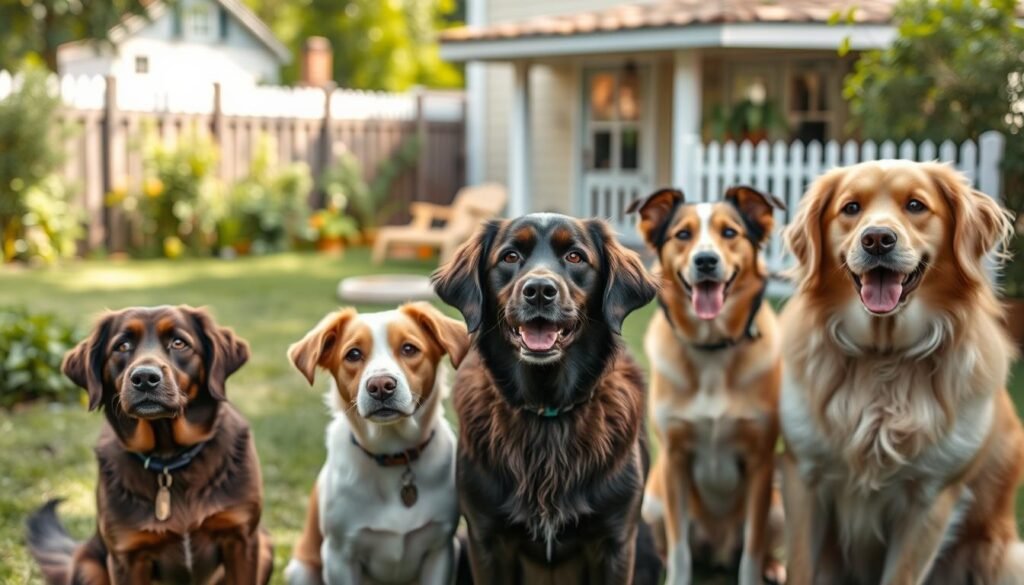
Facilitating Positive First Interactions
The first meeting between your dog and family is vital. Make sure it’s calm and controlled. Keep the dog leashed or in a separate room initially. This allows it to get used to new sights and smells. Then, introduce family members gradually, starting with those who will spend the most time with the dog.
Teaching Children Proper Dog Handling and Respect
Teaching children how to handle the dog is essential. Show them not to disturb the dog while it eats or sleeps. Teach them to pet the dog gently. Always supervise interactions between children and the dog, ensuring a safe and joyful experience for both.
How to Train Dogs in a Family Environment
Creating a harmonious home environment for both dogs and family members starts with effective dog training. Training a dog in a family setting involves more than just basic obedience commands. It’s about fostering a relationship built on trust, respect, and clear communication.
Establishing Essential Commands for Family Safety
Essential commands are the foundation of dog training and are critical for maintaining family safety. Commands such as “sit,” “stay,” “come,” and “leave it” help manage your dog’s behavior in various situations. For instance, teaching your dog to “stay” can prevent them from running into the street or getting into harmful substances.
Key Commands for Family Safety:
- Sit: Helps in managing mealtime and preventing jumping up.
- Stay: Keeps your dog in place, preventing possible dangers.
- Come: Ensures your dog returns to you immediately, even when distracted.
- Leave it: Prevents your dog from picking up harmful items.
Creating Age-Appropriate Training Activities for Children
Involving children in dog training not only teaches them about responsibility but also strengthens the bond between children and dogs. It’s essential to create training activities that are appropriate for the child’s age. This ensures both the child’s and dog’s safety and enjoyment.
| Child’s Age | Training Activities |
|---|---|
| 4-6 years | Simple commands like “sit” and “stay” with positive reinforcement. |
| 7-10 years | More complex commands and involving the child in short training sessions. |
| 11+ years | Advanced training techniques and taking on more responsibility for the dog’s daily care. |
Solving Common Behavioral Challenges in Family Dogs
Despite the best training, dogs can sometimes develop behavioral challenges. Common issues include barking, chewing, and digging. Addressing these challenges requires patience, consistency, and understanding the underlying cause of the behavior.
For example, a dog that barks excessively might be doing so out of boredom or anxiety. Providing adequate exercise and mental stimulation can help alleviate this issue.
By establishing essential commands, creating age-appropriate training activities, and addressing behavioral challenges, you can ensure a harmonious and enjoyable home environment for both your family and your dog.
How to Support Wild Canid Conservation Efforts
Supporting wild canid conservation is vital for the survival of many endangered species in the Canidae family. The dog family, which includes wolves, foxes, and jackals, faces threats like habitat loss, human-wildlife conflict, and climate change. To effectively support conservation efforts, understanding the issue and the steps to take is essential.
Learning About Endangered Dog Family Species
The first step in supporting wild canid conservation is to learn about endangered species in the dog family. Species like the Ethiopian wolf, the red wolf, and the African wild dog are critically endangered. They face threats from human activities and environmental changes. Knowing their habitats, behaviors, and challenges is key to developing effective conservation strategies.

Contributing to Conservation Organizations
Contributing to reputable conservation organizations is a direct way to support wild canid conservation. Groups like the World Wildlife Fund (WWF) and the International Union for Conservation of Nature (IUCN) work hard to protect habitats, monitor populations, and engage local communities. Even small contributions can significantly impact when combined with others’ efforts.
Teaching Children About Wild Canid Protection
Educating the next generation about wild canid conservation is critical for long-term success. Teaching children about canines and their challenges can instill responsibility and compassion. Incorporating wildlife conservation into school curricula and engaging children in citizen science projects is effective.
In conclusion, supporting wild canid conservation requires a multi-faceted approach. This includes learning about endangered species, contributing to conservation organizations, and educating children. By working together, we can ensure the survival of diverse species in the dog family for future generations.
Conclusion
The exploration of Canidae has unveiled the depth and richness of canine evolution and domestication. We’ve delved into the varied members of the dog family, from wolves and foxes to domestic dogs. Each has its own distinct traits and adaptations.
The transformation of wolves into domestic dogs was shaped by human interaction and selective breeding. Recognizing the family-friendly dog breeds and their requirements is vital for families looking to add a dog to their household. The temperament, size, and energy level of a dog are key factors in choosing the best family dogs.
As we wrap up, it’s important to acknowledge the dog family’s vast diversity extends beyond domestic dogs. Wild canids, like wolves, foxes, and jackals, are equally captivating and essential to their ecosystems. Efforts to conserve these species and their habitats are imperative.
In summary, valuing the complexity and diversity of the dog family can deepen our understanding and care for both domestic and wild canines. By making informed decisions about dog breeds and supporting conservation, we can positively impact the well-being of Canidae as a whole.
| Key Aspects | Description |
|---|---|
| Canine Evolution | Understanding the evolutionary journey of canines |
| Domestication | The process of wolves becoming domestic dogs |
| Family-Friendly Breeds | Selecting dog breeds suitable for families |
Sources
The data in this article comes from trusted sources. For more information and to dive deeper into the topics, check out the following resources:
- World Wildlife Fund: Carnivores
- The IUCN Red List of Threatened Species
- American Kennel Club
- Canid Specialist Group
These sources offer in-depth knowledge on canines, their conservation status, and the ongoing efforts to safeguard these remarkable animals.
FAQ
What are some family-friendly dog breeds?
Popular family-friendly dog breeds include Labrador Retrievers, Golden Retrievers, Beagles, and Boxers. These breeds are known for their gentle and affectionate nature. They are suitable for families with children.
How do I choose the right dog breed for my family?
To choose the right dog breed, consider your household’s energy level and living space size. Also, think about the age of your children. Research the breed’s temperament, grooming needs, and exercise requirements.
What are some key characteristics of a good family dog?
A good family dog is gentle, patient, and even-tempered. They should be easy to train and have a low maintenance coat. A good family dog adapts well to various situations and environments.
How can I introduce a new dog to my family safely?
Start by preparing a quiet and comfortable space for the new dog. Gradually introduce the dog to each family member, starting with adults. Supervise interactions between the dog and children. Teach children how to handle and respect the dog.
What are some common behavioral challenges in family dogs, and how can I address them?
Common challenges include barking, chewing, and digging. To address these, establish clear rules and boundaries. Provide adequate exercise and mental stimulation. Use positive reinforcement training techniques.
How can I support wild canid conservation efforts?
Support wild canid conservation by learning about endangered species. Donate to reputable conservation organizations. Spread awareness about protecting wild canids and their habitats.
What are some kid-friendly dog breeds that are also low maintenance?
Kid-friendly, low maintenance dog breeds include Boston Terriers, Poodles, and Shih Tzus. These breeds are known for their gentle nature and low grooming needs.
How can I teach my children to respect and care for our family dog?
Start by modeling good behavior yourself. Teach children how to handle the dog gently. Instruct them on the importance of regular care and attention.